Early in my career, I spent many years as an accountant, trained to believe that every good decision could be reduced to a column of numbers—assets on one side, liabilities on the other—leading to a clear, defensible conclusion about profitability, cash flow, and future prospects.
Then an experience volunteering in the developing world changed the way I saw everything. I made what I now call the switch from accounting for business to accounting for life.
The hardest lesson in that transition was this: the decisions that matter most rarely have a clean bottom line.
Here is the framework I return to when there is no straightforward answer.
1. Name the real cost of each option—out loud.
We tend to focus on the cost of the option we are moving away from while quietly minimizing the cost of the one we prefer.
Write both down.
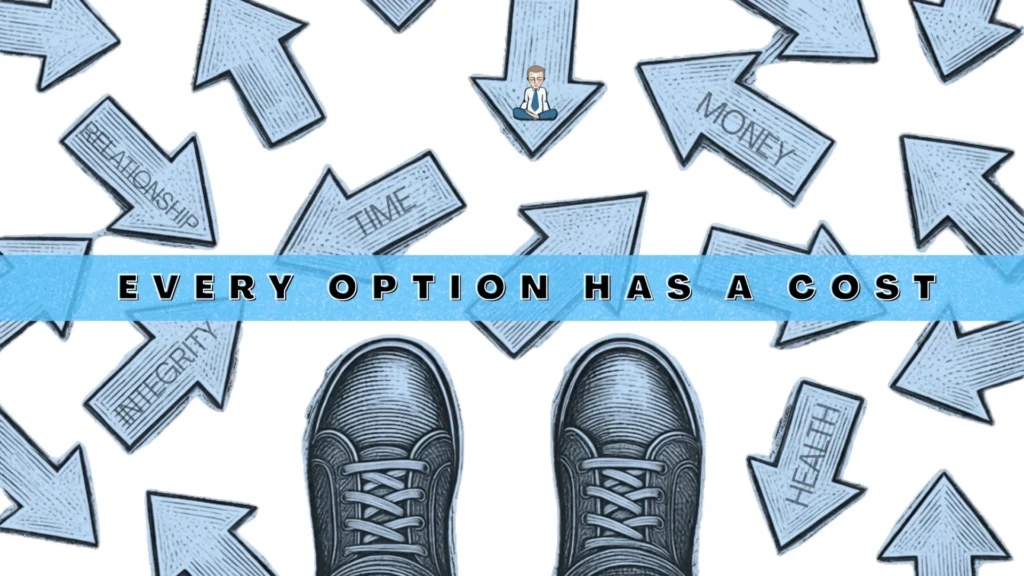
What does it actually cost—in time, money, relationships, health, or integrity—to say yes? And what does it cost to say no? Seeing both costs side by side strips away the story we tell ourselves to make our preferred option appear free.
2. Ask which cost you can carry—not which cost is smaller.
Not all costs carry the same weight, even when they look similar on paper.
Disappointing someone may be uncomfortable. Misleading them is something else entirely. A financial loss and a loss of self-respect are not the same currency.
I ask myself: Which cost, if I pay it, still allows me to sleep peacefully?
That is a very different question from “Which costs less?”—and it often leads to a clearer answer than any spreadsheet.
Before comparing options, establish your non-negotiables. Otherwise, an attractive reward can tempt you to negotiate away something essential.
3. Move the decision out of the noise and into stillness.
Every tradition of wisdom I have studied points to the same truth: our clearest decisions rarely emerge from anxiety. They emerge from stillness. Before deciding, take even 10 quiet minutes away from your phone, inbox, and others’ opinions. Ask the question without defending either answer.
Then notice what settles within you—not simply what argues the loudest.
4. Zoom out to the story you want to tell.
Costs can feel enormous in the moment and often look very different in hindsight. Ask yourself: A year from now, when I tell the story of this decision, which version of myself do I want to have been?
Not the version that looked smartest in the meeting. The version you can be proud of when you retell the story honestly.
That question can save you from more short-term-comfortable, long-term-regrettable choices.
5. Let go of the fantasy of a painless choice.
This is perhaps the lesson people resist most—and the one that matters most. As long as you are searching for the no-cost option, you will remain stuck. It does not exist.
The moment you accept that you are choosing between costs, not between a cost and a free lunch, you become free to choose with clarity rather than paralysis. Sometimes acceptance—not more analysis—is what unlocks the decision.
6. Decide, then serve the decision.
Once you have chosen, the work is not over; it is just beginning.
A decision that is made and then endlessly second-guessed pays its cost twice—once when you make it and again every time you reopen it.
Give your decision your full commitment for a defined period before allowing yourself to reconsider it. Your energy is better spent serving the decision than endlessly questioning it.
7. Count the cost of doing nothing.
Waiting can feel safe because it postpones the visible consequences of choosing. But inaction has consequences too. The difficult conversation becomes resentment. The overloaded team becomes disengaged. The opportunity passes while you keep reconsidering it.
Of course, pausing to gather important information is wise. But learn to distinguish purposeful waiting from avoidance.
None of these steps promises a painless answer—because there isn’t one. What they offer is something more durable: a way of choosing that you can live with, grounded in clarity rather than avoidance.