At a company retreat, a CEO invited honest feedback. One colleague offered a challenging observation:
“You encourage us to take ownership, but when we make a decision different from yours, you override it.”
His instinct was to defend himself—deadlines, standards, and pressures his team could not see. Instead, he paused and asked, “Can you give me an example?”
The conversation was uncomfortable but revealing. He began to see how his commitment to high standards had gradually become a habit of control.
His pursuit of excellence had come at the expense of connection. He realized that leadership required loosening the ego’s grip and becoming more humble, present, courageous, and open to change.
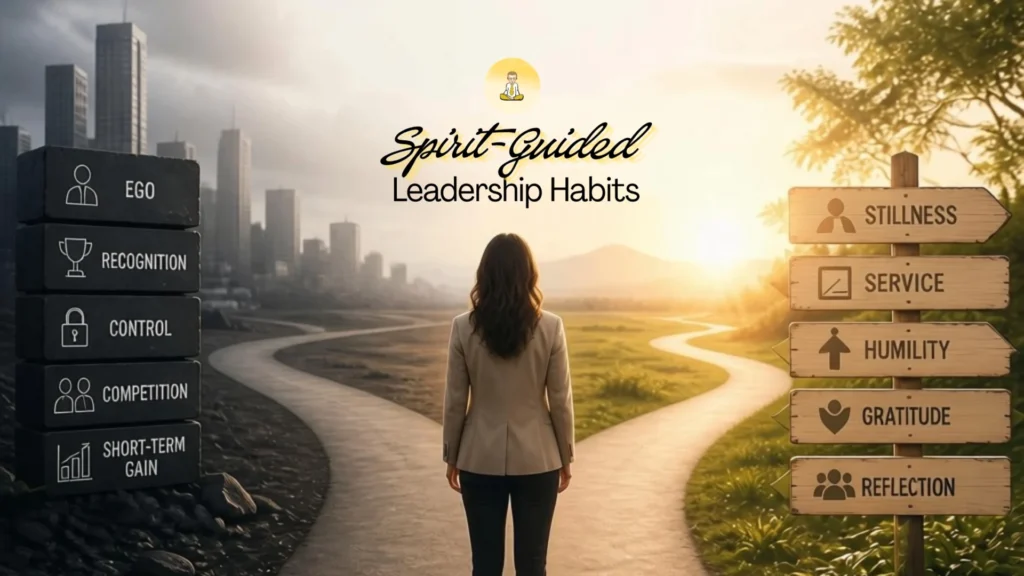
This is the essence of spirit-guided leadership: overcoming the ego so we can lead with greater wisdom, especially when we are tired, challenged, or under pressure.
In the Corporate Sufi philosophy, Business, Balance and Beyond work in harmony—creating enterprise value, honoring life as a whole, and serving a purpose larger than ourselves.
Here are five habits to make that philosophy practical:
1. Stillness Before the Day Begins
Before the messages, meetings, and decisions, create a few moments of silence.
Ask: What quality do I want to bring to this day?
Practice: Sit quietly for three minutes. Focus on your breath and choose one
quality—patience, courage, or compassion—to guide you.
Stillness creates space between what happens and how you respond. That space is invaluable under pressure.
2. Make Service a Daily Intention
Leadership is influence. Use it consciously to help others succeed.
Ask: Who can I serve most meaningfully today?
Practice: Ask one person, “How can I support you to do your best work?” Then take one concrete action.
“Service” might mean removing an unnecessary approval, offering honest feedback, or protecting your team from an unrealistic commitment.
At its heart is the Namaste ethic: honoring the dignity of every person, regardless of role or status.
3. Stay Humble When You Feel Certain
Certainty can close a conversation before wisdom has a chance to enter.
Ask: What might I be missing, misinterpreting, or miscalculating?
Practice: Before an important decision, actively invite challenge. Listen before defending. And when someone changes your mind, acknowledge it openly.
Humility does not weaken authority. It makes better decisions possible.
4. Turn Gratitude into Recognition
When focused on what is missing, we can overlook what is working.
Ask: Who deserves recognition today?
Practice: Thank one person for something specific and explain the difference their contribution makes. Look beyond the most visible performers—to those who quietly solve problems, keep commitments, and support others.
People perform differently when they feel seen.
5. Reflect, Repair and Release
End the day with an honest review.
Ask: Where did I live my values? Where did fear, impatience, or ego take over? What needs repair?
Practice: Write down one lesson and one action for tomorrow. If necessary, apologize, reconsider a decision, or establish a boundary. Then close the day.
Your family, relationships, health, and inner life deserve the same presence you bring to work.
Leadership Beyond Accomplishment
These habits may never appear on a balance sheet or performance report. Yet they shape the qualities that ultimately influence both.
Strategy, execution, and results will always matter. But inner growth gives us the capacity to pursue them with greater empathy, integrity, and wisdom.
True leadership moves beyond personal accomplishment toward collective advancement.
And that shift—from self-serving to spirit-guided leadership—begins within.