A senior leader once told me:
“We’ve trained our people, invested in workshops, digital learning platforms, and leadership programs. Yet, when change comes, they still wait to be told what to do.”
That observation reveals a deeper truth:
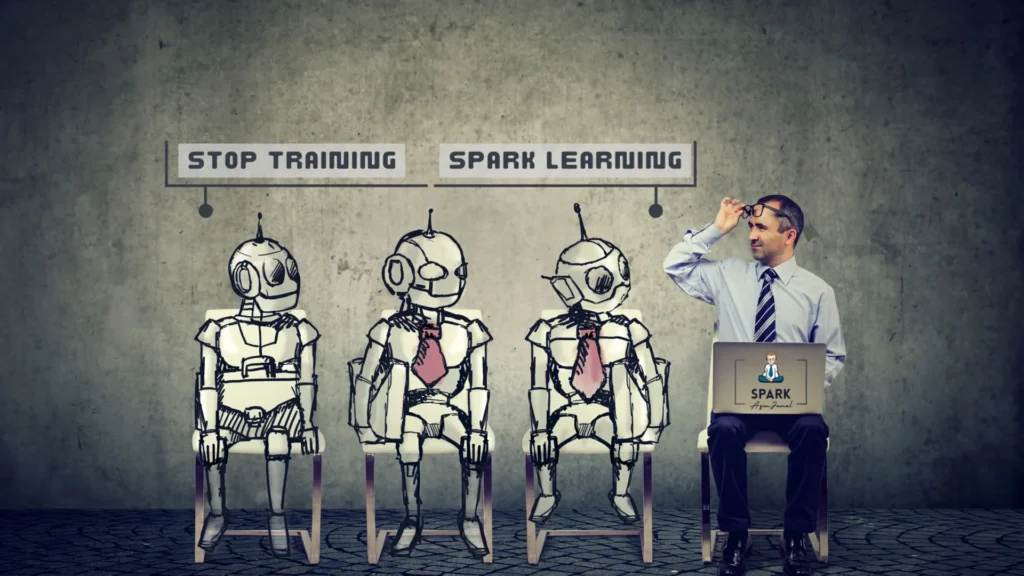
Training is not the same as learning.
And learning is not the same as transformation.
Today’s leaders are not simply facing a skills gap. They are facing an energy gap, a meaning gap, and an adaptability gap. In many organizations, people are overloaded with information but disconnected from purpose. Busy, but not fully engaged. Productive, yet emotionally exhausted.
The challenge is no longer just how to improve performance.
It is how to ignite and sustain the human spark behind performance — without burning people out.
This is where the Corporate Sufi Way offers a different path:
Integrating purpose, presence, and performance so people can grow, adapt, and contribute with greater wisdom, resilience, and humanity.
Training Alone Cannot Keep Up
For decades, organizations followed a familiar rhythm:
- Identify a skills gap
- Design a training program
- Deliver the program
- Measure outcomes
- Repeat
That model worked in a more stable world.
But today, industries are shifting faster than annual learning calendars can respond. Artificial intelligence is transforming not only what we do, but how we think, decide, communicate, and learn. Roles evolve quickly. Customer expectations change overnight. Information becomes outdated almost instantly.
In such an environment, traditional training can become too slow, too disconnected, and too removed from the realities of daily work.
The real question for leaders is no longer:
“What training should we provide?”
But rather:
“How do we create a culture where learning, reflection, and growth happen continuously — in real time, in real work, and in ways that sustain people rather than drain them?”
Work Is the New Classroom
Human beings have always learned best through lived experience.
A craftsperson learns beside a master. A leader grows through difficult decisions. Wisdom is often born through setbacks, reflection, feedback, and the courage to try again.
Technology now allows this learning to happen faster and more intelligently:
- Sales teams receive real-time coaching after client conversations
- Managers use AI tools to prepare for difficult discussions
- Project teams receive predictive risk insights before key decisions
- Employees receive immediate feedback on proposals, presentations, and analysis
This is learning in the flow of work.
But technology alone is not the transformation.
The deeper shift is cultural and human.
Leading organizations understand that learning is no longer separate from work. It is the work. And sustainable performance depends not only on capability, but also on emotional energy, psychological safety, and meaningful connection.
5 Ways to SPARK Learning into the Flow of Work
1. Shift from information transfer to inner transformation
Most training focuses on content.
Real learning changes awareness.
People do not sustain growth simply because they attended a workshop. They grow when learning connects to identity, values, and purpose. When people understand how their work contributes to something meaningful, engagement deepens naturally.
The Corporate Sufi Way reminds us that learning should not only sharpen competence — it should awaken consciousness.
Because skill without meaning eventually leads to fatigue.
2. Bring learning into the present moment
Learning is most powerful when it happens at the moment of need.
Not three months later in a forgotten module.
The best organizations create systems where insight, coaching, and reflection are embedded directly into daily work. This builds presence — the ability to respond consciously instead of reacting mechanically.
Presence improves decision making, collaboration, innovation, and resilience.
In a distracted world, presence becomes a leadership advantage.
3. Turn experience into wisdom
Many organizations are rich in activity but poor in reflection.
Teams move quickly from one meeting, project, or crisis to the next without pausing to extract learning.
Yet wisdom is not created by experience alone. It is created by reflected experience.
After key moments, leaders should encourage teams to ask:
- What did we learn?
- What worked well?
- What would we do differently?
- What must we carry forward?
This simple discipline transforms activity into insight and pressure into progress.
Reflection is not a pause from performance.
It is what elevates performance.
4. Develop coaches, not controllers
The role of leadership is changing dramatically.
In fast-changing environments, people do not need constant supervision. They need guidance, encouragement, and perspective.
The leaders who ignite the spark in others are those who:
- Listen deeply
- Ask thoughtful questions
- Create psychological safety
- Encourage curiosity
- Help people navigate uncertainty with confidence and calm
Coaching-centered leadership builds resilience because it develops people internally, not just operationally.
And resilient people sustain performance longer without emotional depletion.
5. Reward curiosity, compassion, and courage
People cannot learn in environments where fear dominates.
If employees are afraid to ask questions, admit mistakes, or challenge assumptions, learning slows and innovation suffers.
Cultures of blame drain energy.
Cultures of compassionate accountability release energy.
The organizations that thrive in the future will reward not only results, but also curiosity, adaptability, humility, collaboration, and continuous growth.
Curiosity keeps the spark alive.
The Future Belongs to the Teachable
The old workplace covenant was transactional:
Your time and skills in exchange for compensation and occasional training.
The emerging covenant is developmental:
A growth-centred environment where people can contribute, evolve, and flourish while delivering meaningful impact.
The future belongs to organizations that combine:
- Human wisdom with intelligent technology
- Performance with purpose
- Achievement with well being
- Innovation with humanity
Because sustainable success is no longer about pushing people harder.
It is about helping people stay connected to their inner spark while navigating constant change.
The world has accelerated beyond the schedule.
The organizations that thrive will not necessarily be the ones with the most training programs.
They will be the ones that create the deepest cultures of learning, reflection, adaptability, and meaning.
The future does not belong to the most trainable.
It belongs to the most teachable — and to those who can ignite the spark in others while sustaining it within themselves.