Gen Z professionals have been born into the most technologically advanced society in history. Often referred to as the “first AI generation,” a lot of how they live, learn, and leisure revolves around the use of generative tools. Tools they interact with organically.
However, even as AI natives, their relationship with artificial intelligence is quite uneasy because of the threats AI poses to their futures. The most profound challenge for leaders: preventing top-down pressures for efficiency that de-humanize workplaces into deeply isolated, transactional, and cognitively exhausting environments.
What are these Gen Z frustrations?
Man vs Machine: As Gen Z enters the workplace, generative AI is exploding. This creates a sense of panic that they are in direct competition with machines.
The Cognitive Comedown: A large percentage of the planning and tasks are run by chatbots and increasingly robots. This trend is worrying, because it harms critical thinking and learning.
Soulless Subject-Matter: “That’s so AI!” is a common phrase heard in Gen Z circles used to describe “fake” or “sellout” media. This dominates and coerces community trends and habits.
So, how can senior leaders and their management teams address these growing Gen Z frustrations within their work environments?
In last week’s blog on fusing digital communication friction, I recommended practising unwavering human empathy through an Ultimate Purpose Credo (UPC)—one that places inclusion, understanding, and compassion at the heart of every strategy, tactic and initiative.
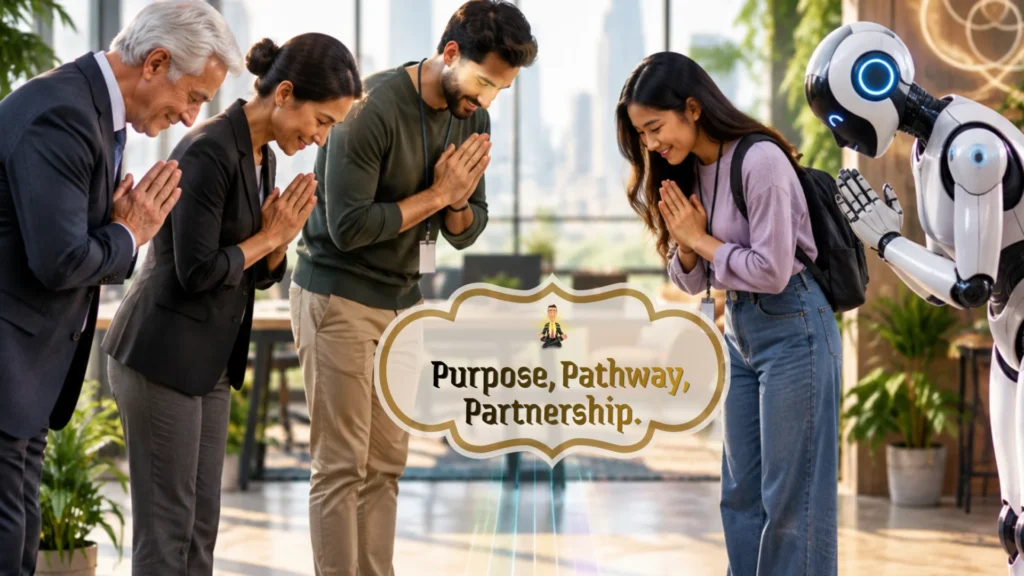
This week, I want to build on that concept through a sub-element of SPARK’s Service principle – Namaste. Inspired by the Sanskrit expression meaning “I bow to you,” Namaste is about honouring another person’s soul journey through life.
In business, it is easy to prioritize the corporate persona over the human person. Yet, approaching goals and objectives in service of people first has the power to elevate both tasks and teams, creating impact that extends well beyond the workplace.
Purpose, Pathway, Partnership
Today’s landscape calls for intentional workforce design, not simply technology adoption. We need environments where human identity and emotional connection are not diluted by mechanical conformity.
- Purpose: Connects intrinsic meaning with service. Aligning personal values with broader needs helps teams find significance alongside success.
- Pathway: Provides a roadmap for developing human skills, establishing work-life boundaries, and prioritising personal growth alongside organisational progress.
- Partnership: Deepens authentic human collaboration while leveraging AI as a capable co-pilot, freeing cognitive bandwidth for meaningful work.
Together, these three elements allow people to determine the why while AI helps accelerate the what.
Three Ways to Honour Human Progress
1. Imperfection as Premium, Not Poor
AI can produce polished articles and flawless graphics. Yet, increasingly, people value work that carries visible proof of humanity. Its imperfections, quirks, and flaws make it relatable and authentic.
How to: Day-to-Day Namaste
Bring mindful presence into everyday interactions. Listen fully, connect with kindness, and respect colleagues’ human fallibility. This also helps counter AI-related cognitive overload and the erosion of social connection.
2. Authenticity as Premium, Not Accuracy
The phrase “that’s so AI” has become a Gen Z expression of frustration with manufactured trends and relationships that feel performative. Many are rediscovering the early internet’s messy, spontaneous culture and seeking digital spaces where genuine human conversations thrive.
How to: Soul Proprietorship
Respect others while remaining true to your own values, morals, and ethics. Replace corporate jargon and scripted playbooks with open, accessible conversations. An “ask me anything” approach reduces anxiety and reinforces that the human touch still matters.
3. Nurture and Nature as Normal, Not Niche
Purposeful service flourishes in high-trust environments, and trust grows through consistent nurturing. When leaders allow automation to displace Gen Z’s cognitive contributions, trust erodes. Over time, this can create a brain drain—weakening critical thinking, talent retention, and loyalty as people seek opportunities elsewhere.
How to: Less Digital, More Analog
Make people contributors to something bigger than their names on a screen. Balance digital-first environments with screen-free collaboration. Reintroduce shadowing, apprenticeships and rotational assignments that expose people to practical challenges. Give younger employees ownership of projects where human judgment, creativity, and experience matter. These steps shift the intellectual dial from artificial to genuinely human.
SPARK Connection: Human Agency Over AI Agents
Greatness takes shape through everyday experiences: someone listens, an idea is considered, help is offered, a contribution is appreciated, and an opportunity for growth emerges.
Preserving individual agency in our collective success requires a shared mindset of significance. One person cannot truly flourish at the expense of another. Purpose, a clear pathway, and genuine partnership make shared progress possible.
Now more than ever, leaders navigating this generational crossroads must prioritize human progress—not as an opportunity-cost calculation, but as an imperative for creating lasting impact.
And what better way to achieve this than by honouring one another through a collective bow?
Namaste. 🙏
What Namaste-inspired practice could you introduce to ensure every person on your team feels seen, valued, and connected?