I was speaking with a business leader whose company was doing well by every traditional measure. Revenue was growing. The team was strong. The strategy appeared sound.
Yet something was unsettling him.
“We’ve built for growth,” he said thoughtfully. “I’m not sure we’ve built for disruption.”
His comment captures a quiet realization many leaders are beginning to confront.
Uncertainty today no longer feels temporary. It feels structural. Geopolitical tensions shift energy markets overnight. Regulatory changes reshape supply chains. Trade disputes, political instability, and economic fragmentation ripple through organizations in ways leaders cannot fully predict.
These forces invite a deeper leadership question:
What kind of business are we truly building?
For decades, the answer seemed obvious: an efficient one. Maximize productivity. Minimize waste. Optimize systems.
Efficiency remains valuable. But the world is reminding us that efficiency alone cannot create resilience.
A business can look strong on the outside while resting on fragile assumptions beneath the surface. Often the most dangerous assumption is the belief that tomorrow will look much like today.
When that assumption breaks, the consequences spread quickly. A delayed shipment becomes a broken promise. A policy shift triggers anxiety across teams. What seemed like a small disturbance exposes deeper fragility.
Resilience, therefore, is not merely a strategy.
It is a leadership mindset.
In the spirit of Corporate Sufi thinking, resilience begins with awareness — the humility to recognize uncertainty and the wisdom to prepare without panic.
It asks leaders to build organizations not only for performance, but for endurance.
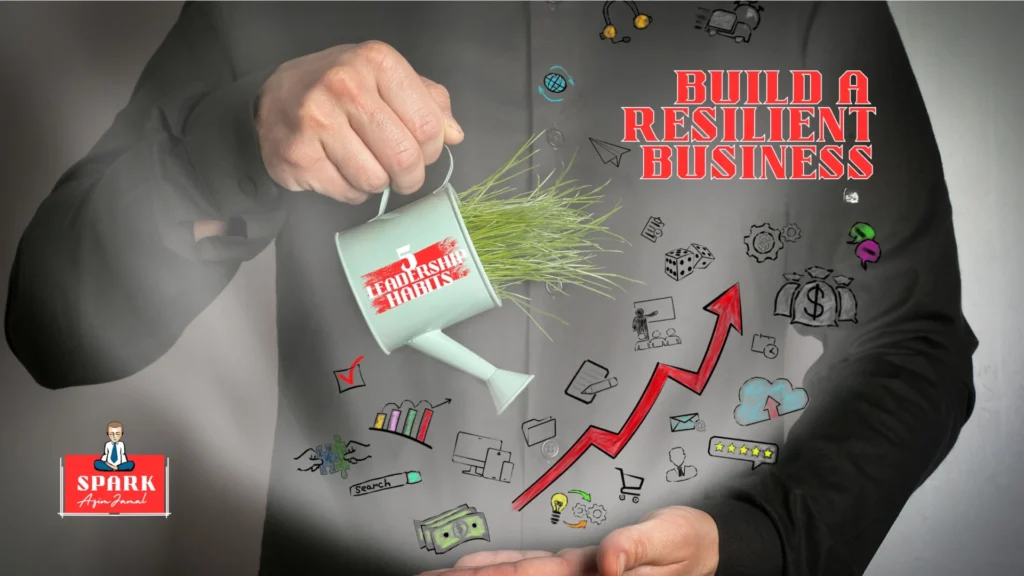
Five Leadership Habits That Build Resilient Organizations
1. Diversify before disruption forces you to
When everything appears stable, diversification can feel unnecessary. Yet wise leaders know that resilience is built in calm periods, not crisis.
Alternative suppliers, markets, and partnerships provide flexibility when circumstances shift unexpectedly.
2. Create buffers, not just efficiency
Many organizations remove every ounce of slack in pursuit of productivity. Yet resilience requires breathing room.
Financial runway, spare capacity, and realistic timelines allow leaders to respond thoughtfully rather than react emotionally.
3. Practice scenario thinking
Resilient leaders regularly ask: What if?
What if a key market slows?
What if costs spike?
What if a major partner cannot deliver?
These questions are not pessimistic. They are practical expressions of foresight.
Preparedness creates calm when disruption arrives.
4. Invest deeply in trust
Trust is one of the most undervalued forms of organizational capital.
Customers, employees, and partners are far more supportive during uncertainty when relationships have been nurtured with honesty and respect.
Contracts manage transactions. Trust sustains partnerships.
5. Lead from purpose, not panic
When uncertainty rises, fear can quietly take the steering wheel. Decisions become reactive. Short-term survival overshadows long-term wisdom.
Purpose brings leaders back to what truly matters. It widens perspective and steadies judgment.
Panic creates motion. Purpose creates direction.
The Resilient Business Model
Ultimately, resilience is not only about systems or structures. It is about the inner posture of leadership.
Organizations tend to mirror the consciousness of their leaders. When leaders act from fear, organizations become fragile. When leaders act from clarity and purpose, organizations become steady.
Resilient businesses therefore reflect deeper leadership qualities:
- Integrity when shortcuts are tempting
- Stewardship when pressure mounts
- Patience when others rush
- Trust when uncertainty tests relationships
They carry their SPARK.
And that SPARK — grounded in wisdom, compassion, and courage — is what ultimately allows a business not only to survive, but grow and thrive.
2 Responses
Every day is a new beginning
wish you best and best